How to Start a Corrugated Box Manufacturing Business in India

Corrugated boxes are used to ship almost everything, from food and pharma to engineering goods and e-commerce parcels. That steady demand is why many entrepreneurs look at corrugated box manufacturing as a business. But the plant you build decides your margins, so it pays to plan the machinery, space and raw material carefully before you spend.
Step 1: Decide what you will make
Start with your target customers. A unit that supplies local factories with plain 3 ply boxes needs a very different setup from one that supplies printed 5 ply export cartons. Visit nearby industrial areas, talk to buyers, and note which box sizes, ply and print quality they ask for.
Most new units begin in one of two ways:
- Box converting only: you buy ready corrugated sheets and convert them into boxes. Lower investment, but you depend on sheet suppliers.
- Board making plus converting: you buy paper reels, make the board yourself and convert it. Higher investment, better control of cost and quality.
Step 2: Plan space, power and manpower
Corrugated machinery needs a level floor, enough height, good ventilation and a steady three phase power supply. You also need covered space to store paper reels, finished sheets and boxes. Keep the layout in a straight flow: reel storage, board making, cutting, converting, then dispatch.
A small converting unit can run with a handful of trained people. A board line needs more operators and a skilled person for the corrugator.
Looking for the right machine? Tell us your requirement.
Send Inquiry →Step 3: Choose the right machinery
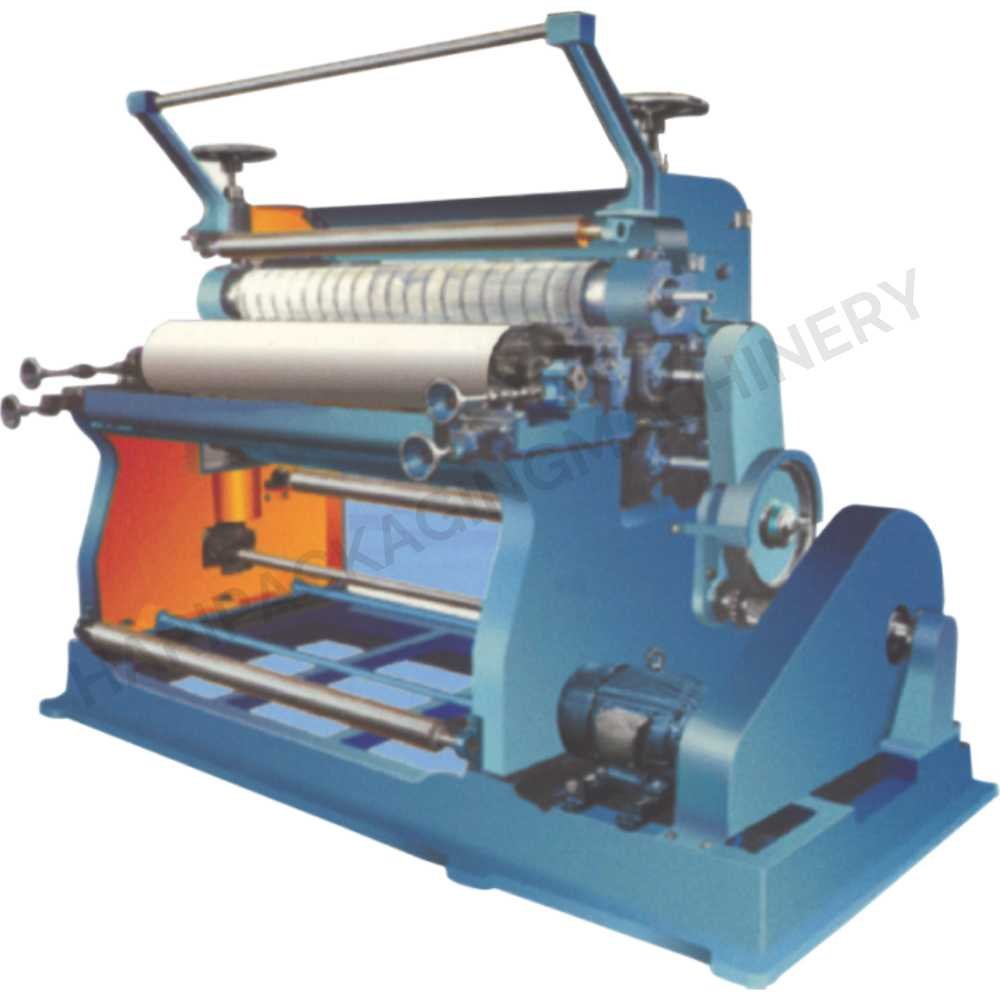
The machinery list depends on your plan, but a typical unit includes a corrugation machine or single facer, reel loading stands, a cutting machine, slotting and creasing machines, a stitching machine, and a printing machine if you print boxes. Read our guide to the complete machinery list for a corrugated box plant to see how each machine fits.
Compare machines on output speed, working width, power use, build quality and service support, not only on price. You can see the range we manufacture on our products page.
Step 4: Arrange raw material
Your main raw materials are kraft paper reels (liner and fluting medium) and a starch based adhesive. Paper is bought from mills or traders in different GSM and bursting factor (BF) grades. Build relationships with two or three reliable suppliers so that a single delay does not stop production.
Step 5: Complete registrations and compliance
Typical requirements include business registration, GST, Udyam (MSME) registration, local factory and fire safety approvals, and pollution board norms where applicable. Rules differ by state and city, so confirm the exact list with your local authority or a consultant before you start.
Common mistakes to avoid
- Buying the cheapest machine without checking after sales support and spare parts.
- Ignoring power load and floor space until the machine arrives.
- Starting a full board line without enough working capital for paper stock.
- Skipping operator training, which causes rejections and downtime.
Frequently asked questions
How much investment is needed for a corrugated box unit?
It depends on the machines and building. A small converting unit needs far less than a full board making line. Request quotes for your planned capacity and add working capital for paper stock.
Should I make corrugated board or only boxes?
New owners often start with box converting to learn the market, then add a corrugation machine once demand is steady and they can manage paper stock.
Can I buy machines directly from a manufacturer?
Yes. Buying from a manufacturer such as Hari Packaging Machinery lets you discuss specifications, customisation and spare parts directly.